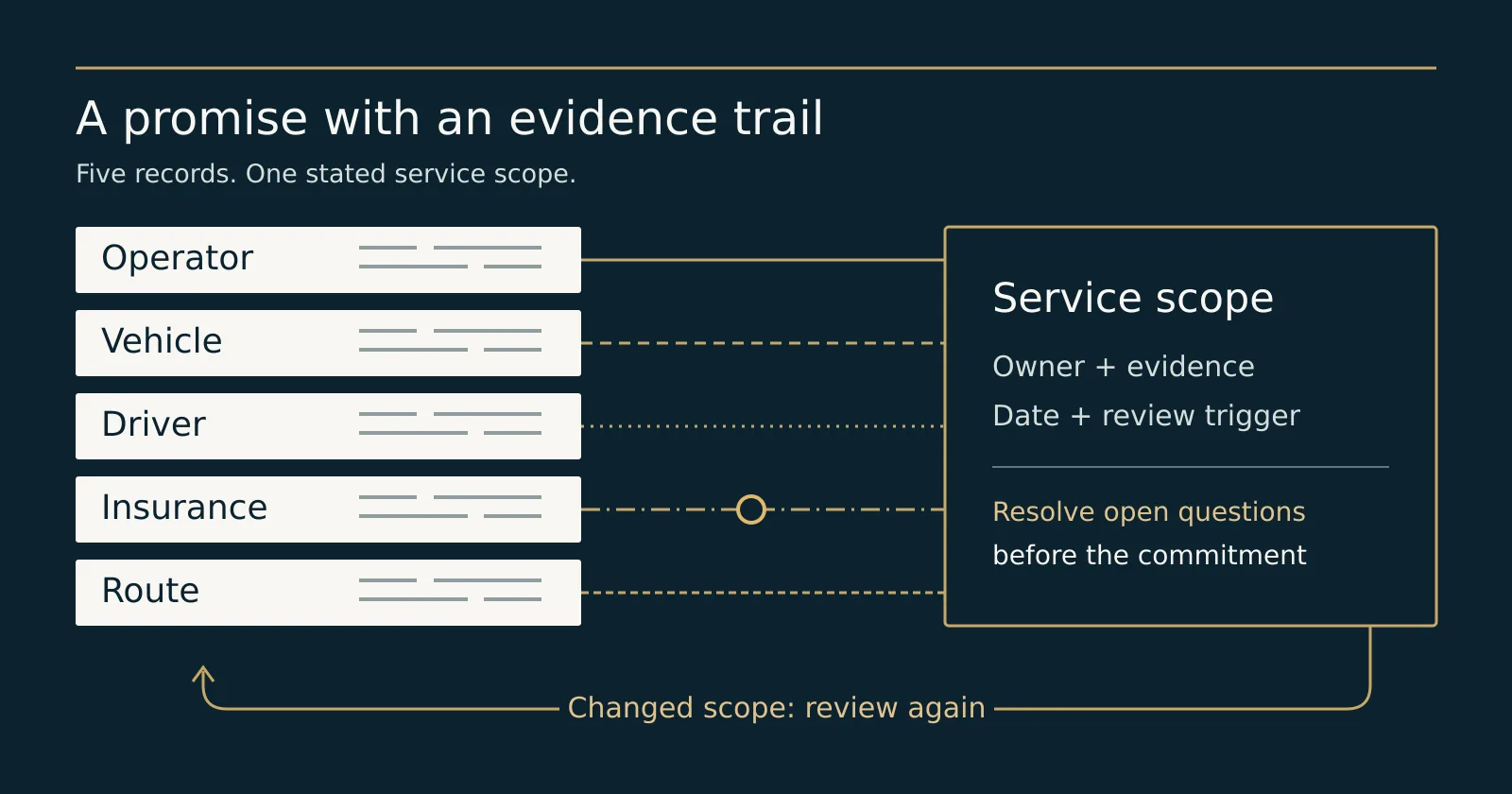
A proposed passenger service can begin with a simple question: does the driver need a special license? Answering that question leaves other decisions open. Before promising a booking, the owner needs a record of the proposed service, the checks that apply and the evidence supporting each conclusion. This discipline also applies to other services requiring separate approvals.
This guide proposes a management method using an illustrative passenger service. It is not a complete legal-compliance checklist or a finding about any business’s licensing, insurance or readiness to operate. Confirm applicable requirements with the relevant authorities and qualified advisers.
At a glance
- Review operator, vehicle, driver, insurance and trip scope separately.
- Attach each conclusion to an owner, evidence and review date.
- Recheck changed scope before promising the affected work.
Describe the service being reviewed
Write a short service description before collecting answers. For an illustrative passenger service, identify the operating business, vehicle configuration, intended passengers, payment arrangement, pickup and destination, and whether the journey connects with travel beyond the state. Record what the business would provide itself and what another operator would perform.
Give that description a version and date. A question about a vehicle model alone leaves too much unspecified. FMCSA’s Passenger Carrier Guidance Fact Sheet explains that interstate commerce and compensation affect the federal framework. It also notes that some journeys entirely within one state can form part of interstate travel. Ask the relevant authority or qualified adviser to assess the actual arrangement rather than classifying it from the route map alone.
Keep five readiness questions separate
Operator: which business would have operational control, and what authority would its proposed work require? Virginia DMV’s intrastate guidance distinguishes the carrier providing transportation from a broker arranging it and recognizes exemptions. Record the basis for the category selected.
Vehicle: what are the actual configuration, capacity, weight ratings, registration and maintenance requirements for the proposed use? Keep the vehicle record identifiable so a replacement cannot inherit an earlier conclusion unnoticed.
Driver: what license, endorsements, qualifications and training apply to this vehicle and assignment? FMCSA presents driver licensing separately from carrier commercial and safety requirements. Resolve each applicable question.
Insurance: what evidence confirms coverage for the named operator, vehicle, drivers and service, including any required filings? Have the insurer or qualified insurance adviser confirm the relevant terms, limitations and effective dates.
Service and route: does the proposed booking fit the reviewed activity, geography, payment arrangement and pickup conditions? Virginia’s contract-passenger page, for example, addresses operating conditions as well as insurance and vehicle registration. It illustrates why selecting a service category requires more than checking a driver’s license.
Build a register another person can check
Use one row per question, with a named owner, source or document reference, current status, date checked, expiry or review date, and next action. Add the service-description version and the person who reviewed the evidence. Store sensitive driver and insurance documents with appropriate access controls; the working register can point to their location.
Use plain statuses: unresolved, awaiting evidence, verified for the stated scope, or review required. If a requirement is judged inapplicable, retain the reason and its source. A submitted application should remain distinguishable from an issued authorization. A web page explains a framework; the business-specific record must show how the conclusion was established.
For illustration, an insurance row might read: owner, operations lead; status, awaiting evidence; next action, obtain written confirmation for the proposed use; review due, before accepting the affected booking. These are sample fields, not findings about an operating business.
Reopen the record when the scope changes
Identify changes that require another review: a different vehicle configuration, driver, operating entity, payment model, service type or journey. An expiry, cancellation or changed coverage term also needs attention. Put these triggers beside the original conclusion so the team knows when to stop relying on it.
Suppose the illustrative service changes from a reviewed local itinerary to a trip crossing a state line. The manager should flag the new scope, identify the affected questions and obtain the necessary review before confirming that work. An earlier answer remains evidence of what was checked at that time; its application to the changed trip must be established.
Make the customer promise follow the evidence
Give the person accepting bookings a short statement of the verified service scope and the conditions that require escalation. Review advertising and booking language against that statement. Where a material question remains unresolved, hold the affected commitment until the responsible reviewer has resolved it.
Close the readiness review with a dated decision, supporting references, outstanding limitations and the next review trigger. The result is a traceable basis for the customer promise. Maintain that record as the service develops, so new opportunities do not quietly outgrow the evidence behind them.
Working checklist
- Versioned description of the proposed service
- Named owner and reviewer for each readiness question
- Evidence reference, status and date checked
- Expiry dates, limitations and next actions
- Changes that trigger another review
- Booking language consistent with verified scope